



Water Collects
Interior drainage and the natural grade of the crawl space floor lead groundwater toward the lowest point instead of letting it spread out.
Water Management
No amount of insulation fixes a crawl space that fills with water every winter. If groundwater is getting in, it has to be collected and pumped out before anything else you do down there will last.
We install sump basins, pumps, check valves, discharge lines and interior drainage — and we sequence it ahead of insulation and encapsulation so you are not paying twice.
Why It Happens Here
Skagit Valley, the Samish and Nooksack flats, the low ground around Stanwood and Snohomish — a great deal of Northwest Washington sits on soil that holds water and a water table that rises fast once the autumn rain starts. Add a crawl space dug below grade and you have a basin whether anyone intended one or not.
Water finds the low point. It comes up through the soil, in at the footing, down from a blocked gutter or a downspout discharging beside the foundation, and it sits there. Every day it sits, it evaporates into the floor system above — which is how a drainage problem turns into an insulation problem, a mould problem and eventually a framing problem.
Insulating over that is throwing money at a symptom. The fix is to give the water somewhere to go.
How It Works
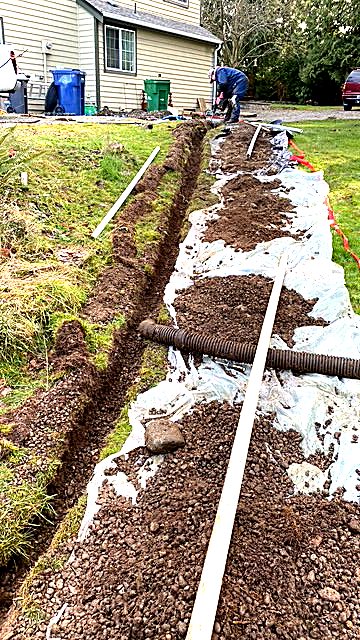
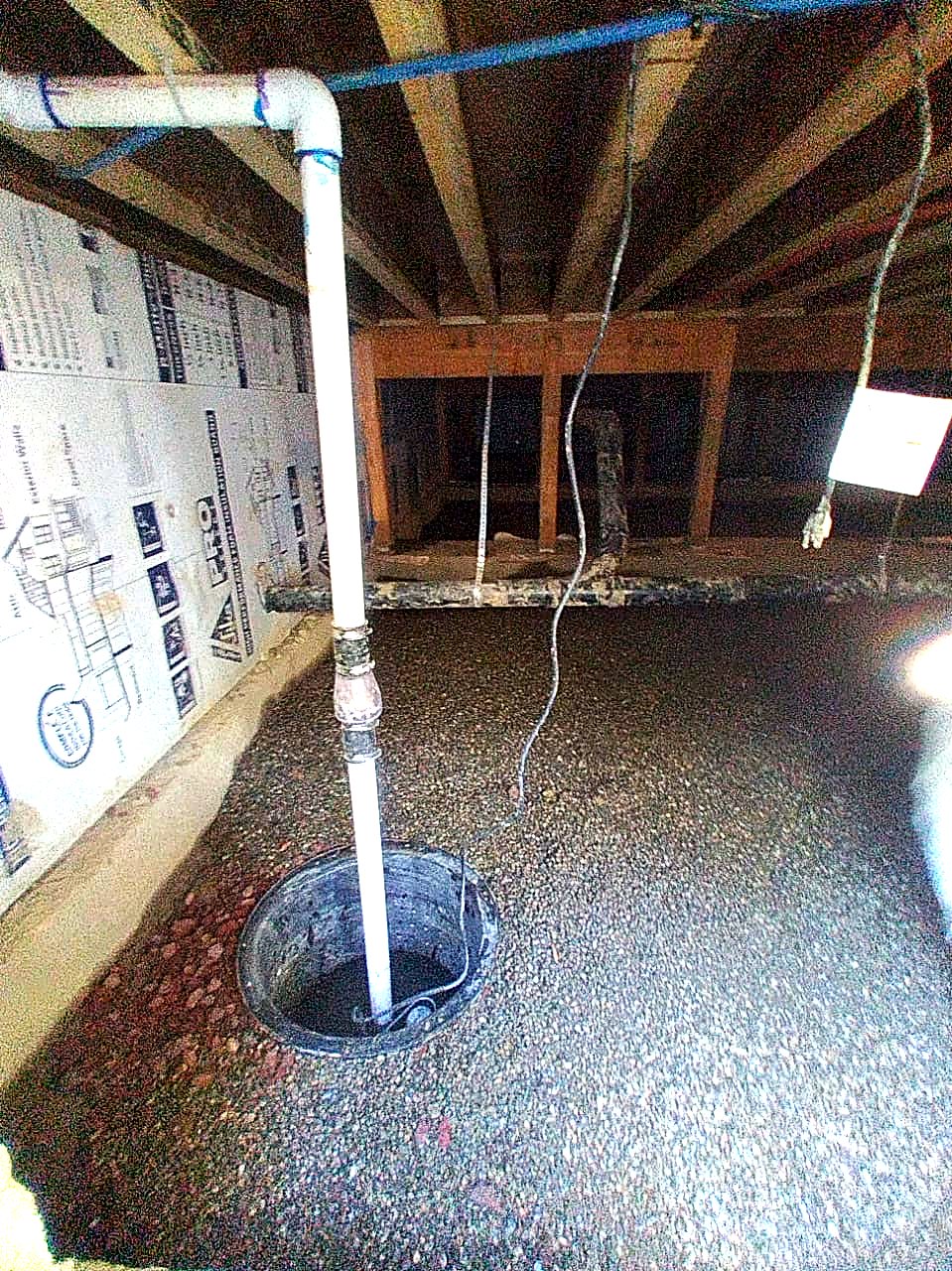
A sump pump does not stop water reaching your crawl space. It collects the water that gets in at the lowest point and moves it back outside before it can do anything.
Interior drainage and the natural grade of the crawl space floor lead groundwater toward the lowest point instead of letting it spread out.
A sealed basin set into that low point catches the water. A float switch inside it tracks the level.
Once the water reaches the trigger height the float starts the pump, which drives the water up the discharge line. When the level drops, it shuts off.
A check valve stops it draining back into the basin, and the discharge line carries it well clear of the foundation.
The Components
Warning Signs
Any water sitting on the crawl space floor, at any time of year. The obvious sign, and the one most often ignored until the insulation fails.
Damp or muddy ground through the summer means the water table, not a one-off leak.
Staining or a water line on concrete piers and stem walls records how high it has been before.
If the batts are wet again a few years after the last replacement, the moisture source was never dealt with.
Persistent damp feeds mould on the joists and subfloor, and that air ends up in the house.
An existing basin that stays dry while the floor is wet usually means a failed pump, a blocked line or a basin in the wrong place.
Keeping It Working
A sump pump is a mechanical part sitting in a wet hole under your house. It will not last forever, and the failures are always discovered at the worst possible moment. Twice a year is enough to stay ahead of it:
Do it in September, before the rain arrives — not in December, when you find out the hard way.
Order Of Operations
If your crawl space needs drainage and insulation and sealing, the sequence matters more than most people expect. Drainage and the sump go in first, while the floor is still open. Then the ground cover or liner. Then insulation and duct work.
Do it in the wrong order and you are cutting into a new liner to dig a basin, or pulling out fresh insulation to run a discharge line. We scope the whole job in one estimate so it only happens once.
Before The Work
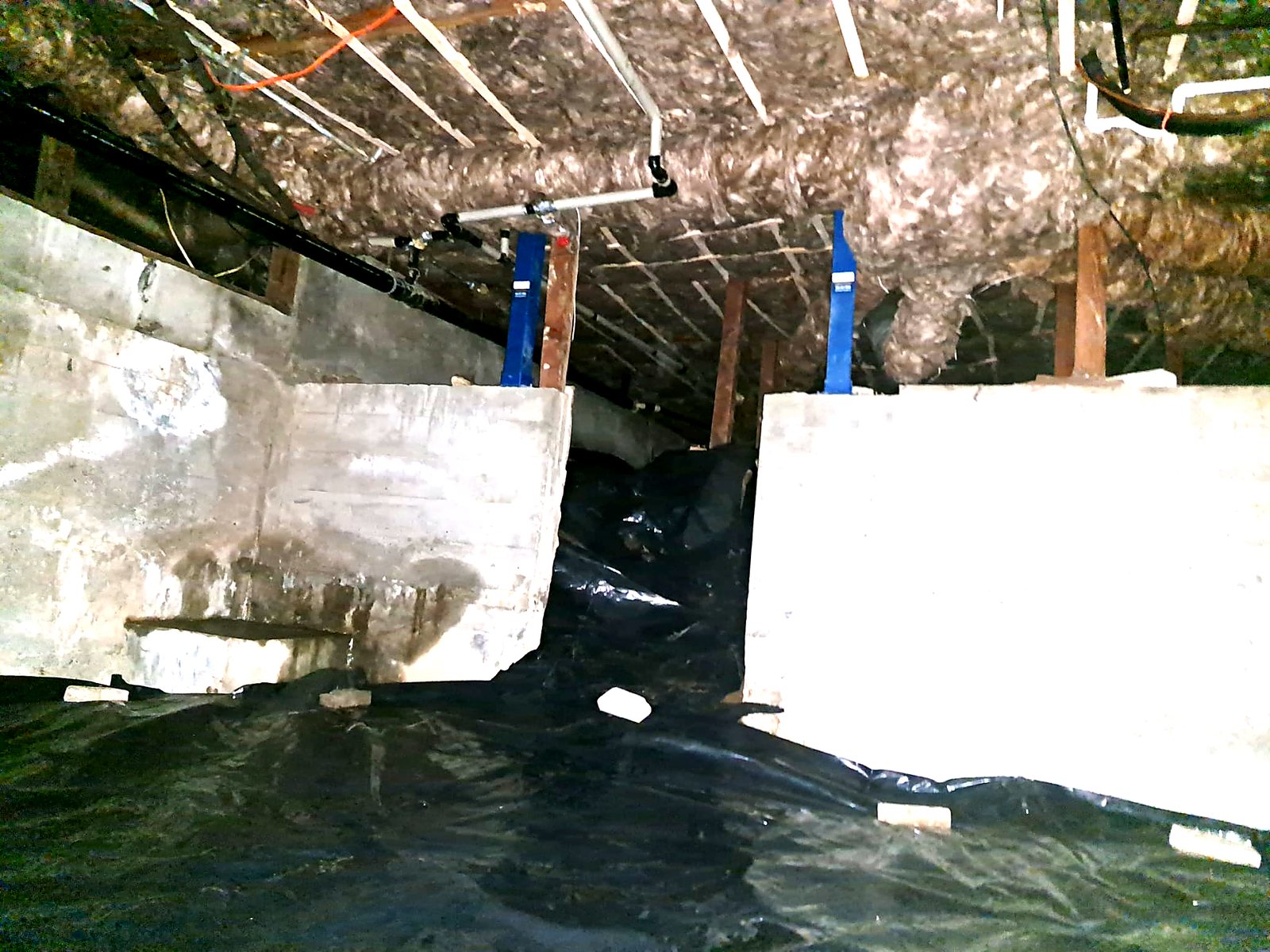
Crawl spaces photographed during assessment, before drainage and replacement work. Click any photo to enlarge it.
Good Questions
Free Estimate
Tell us what you are seeing and when it happens. We will get under there, work out where it is coming from, and quote the fix in the right order.
Call or text(425) 319-2029Same-day replies during business hours.