
Skip to content

Crawl Space Service

Crawl Space Encapsulation

Sealing the crawl space is the difference between slowing the moisture and stopping it. A reinforced liner across the floor and up the walls, vents and rim joists closed off, and humidity held in a safe range year-round.

Around half the air you breathe upstairs comes from under your floor. Encapsulation is how you decide what that air is like.
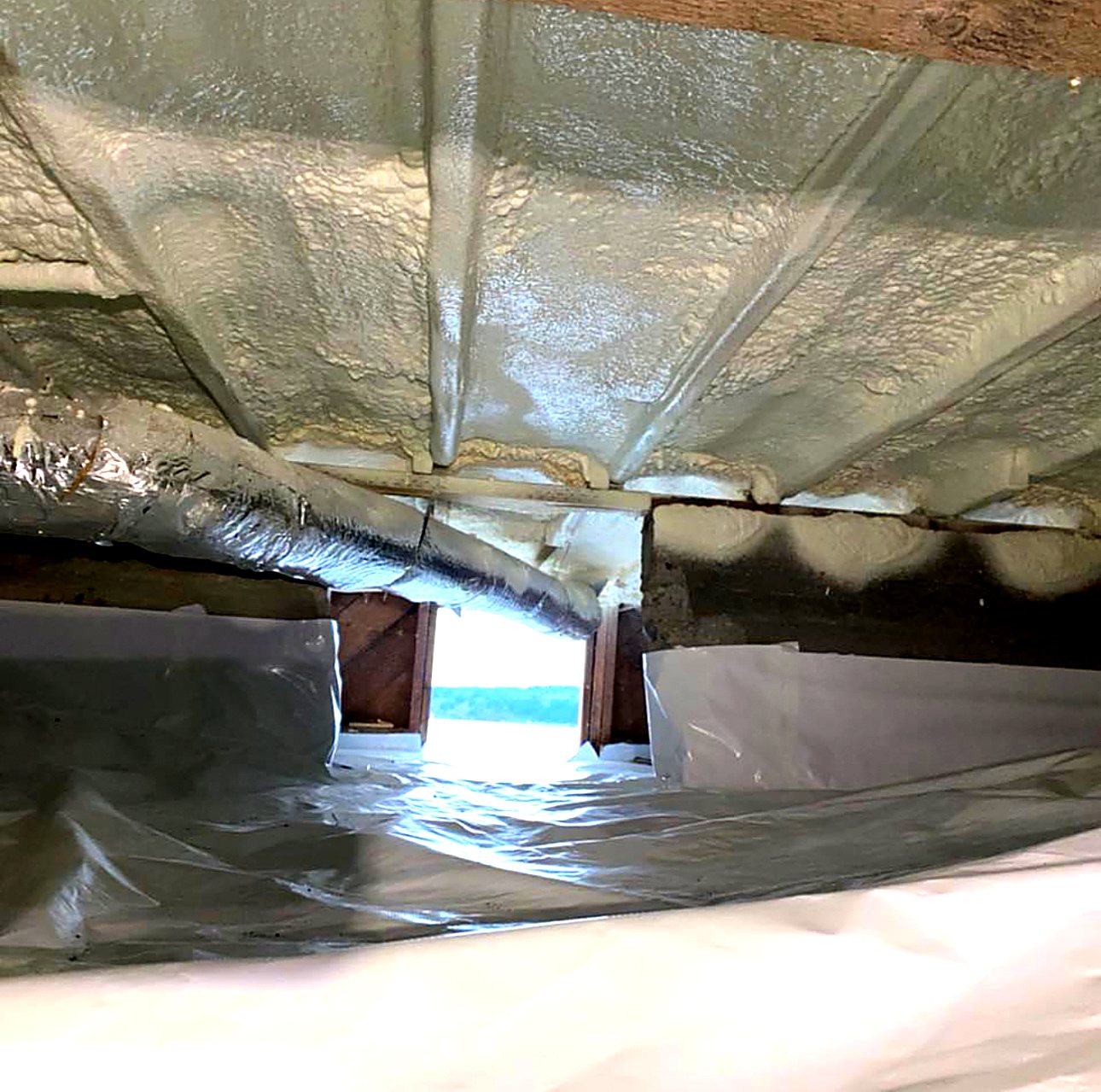
Sealed crawl space with reinforced liner and insulated floor above
50%Of your indoor air

What It Actually Is

A Sealed Crawl Space, Not Just A Liner

Most crawl spaces in this region were built vented: openings around the foundation, bare soil underneath, and the assumption that outside air would keep everything dry. That theory does not survive a Northwest Washington summer. Warm, humid outdoor air moves into a cool crawl space, hits the cold surfaces, and condenses. The vents that were supposed to dry the space out are actively wetting it.

Encapsulation reverses the approach. Instead of trying to ventilate the moisture away, you shut it out: a heavy reinforced liner sealed across the floor and carried up the stem walls, foundation vents closed, rim joists air-sealed, the access door weather-stripped, and — where the space still runs damp — a dehumidifier to hold the humidity below the point where mould can take hold.

The result is a clean, dry, semi-conditioned space under your house instead of a damp one that breathes outdoor air straight up through your floor.

Vapor Barrier vs Encapsulation

Which One Does Your House Need?

These get used interchangeably in sales pitches. They are not the same thing, and the cheaper option is genuinely the right answer for some homes.

Vapor Barrier / Ground Cover

Polyethylene sheeting laid over the dirt floor, lapped and sealed, to stop moisture rising out of the soil. The crawl space stays vented.

  • Lower cost and a smaller project
  • Handles ground moisture, the largest single source
  • Right for a dry, well-drained crawl space
  • Leaves the space vented to outdoor air
  • No humidity control in summer
  • A sensible first step when budget is tight

Full Encapsulation

A reinforced liner sealed to the floor and walls, vents closed, rim joists sealed, humidity actively managed. The space becomes part of the building envelope.

  • Stops ground moisture and humid outdoor air
  • Keeps relative humidity in a safe range year-round
  • Warmer floors and lower heating bills
  • Protects the floor framing long term

Not sure which one your crawl space needs? That is exactly what the free assessment answers — we would rather quote you a ground cover you actually need than an encapsulation you do not.

Warning Signs

When A Crawl Space Is Telling You Something

Any one of these on its own is worth a look. Two or three together usually means the space is working against the house.

Musty Smell Upstairs

That smell is crawl space air arriving in your living space. It does not stay under the floor — air moves upward through the house continuously.

Cold Or Bouncy Floors

Cold floors point at failed insulation. Soft or springy floors point at moisture that has been in the framing long enough to matter.

Climbing Energy Bills

A damp crawl space makes the whole house harder to heat. Humid air takes far more energy to warm than dry air does.

Mould Or Visible Growth

Above roughly 60% relative humidity, mould has what it needs. Joists, subfloor and insulation are all food sources.

Rodents Or Insects

A dark, damp, vented crawl space is ideal habitat. Sealing it removes both the access and the appeal.

Wet Or Sagging Insulation

Batts hanging out of the joists have absorbed moisture, lost their R-value and are not coming back.

The System

What Encapsulation Includes

Encapsulation is not a product, it is an assembly. Leaving out any one of these is what makes the other pieces underperform.

1. Clear And Clean The Space

  • Failed insulation, old sheeting and debris removed
  • Rodent droppings and nesting material cleaned out
  • Affected surfaces cleaned and deodorised
  • Everything bagged at the source and hauled away

2. Deal With The Water First

  • Standing water, seepage and drainage issues identified
  • Interior drainage and a sump pump where groundwater enters
  • Grading, downspout and exterior issues reported
  • Nothing gets sealed over a wet floor

3. Liner On Floor And Walls

  • Heavy-gauge reinforced polyethylene liner
  • Seams lapped and sealed with purpose-made tape
  • Carried up and mechanically fastened to the stem walls
  • Sealed around piers, posts, plumbing and duct penetrations

4. Seal The Openings

  • Foundation vents closed off and sealed
  • Rim joists and band joists air-sealed and insulated
  • Access door insulated and weather-stripped
  • Floor penetrations and duct chases detailed

5. Insulate The Envelope

  • Under-floor or perimeter-wall insulation to suit the assembly
  • Water lines wrapped where freezing is a risk
  • Ductwork sealed, re-supported and wrapped
  • Insulation supported so it stays in contact and never sags

6. Control The Humidity

  • Relative humidity measured after sealing, not guessed at
  • Dedicated crawl space dehumidifier where the space needs one
  • Target held below the ~60% mould threshold
  • Condensate routed to the drain or sump, not onto the liner

The Payoff

What Changes Upstairs

Almost everything homeowners notice after encapsulation happens on the floor above, not in the crawl space itself:
  • The smell goes. Not masked — the source is sealed off.
  • Floors warm up. The most common first comment we get.
  • Bills drop. Dry air is far cheaper to heat than damp air.
  • Air quality improves. Roughly half of it comes from down there.
  • Pests lose interest. No damp, no dark, no easy entry.
  • Framing is protected. The expensive problem you avoid entirely.
  • Storage becomes usable. Clean, dry and light under there.
  • Inspections go smoothly. Documented work, photographed at completion.
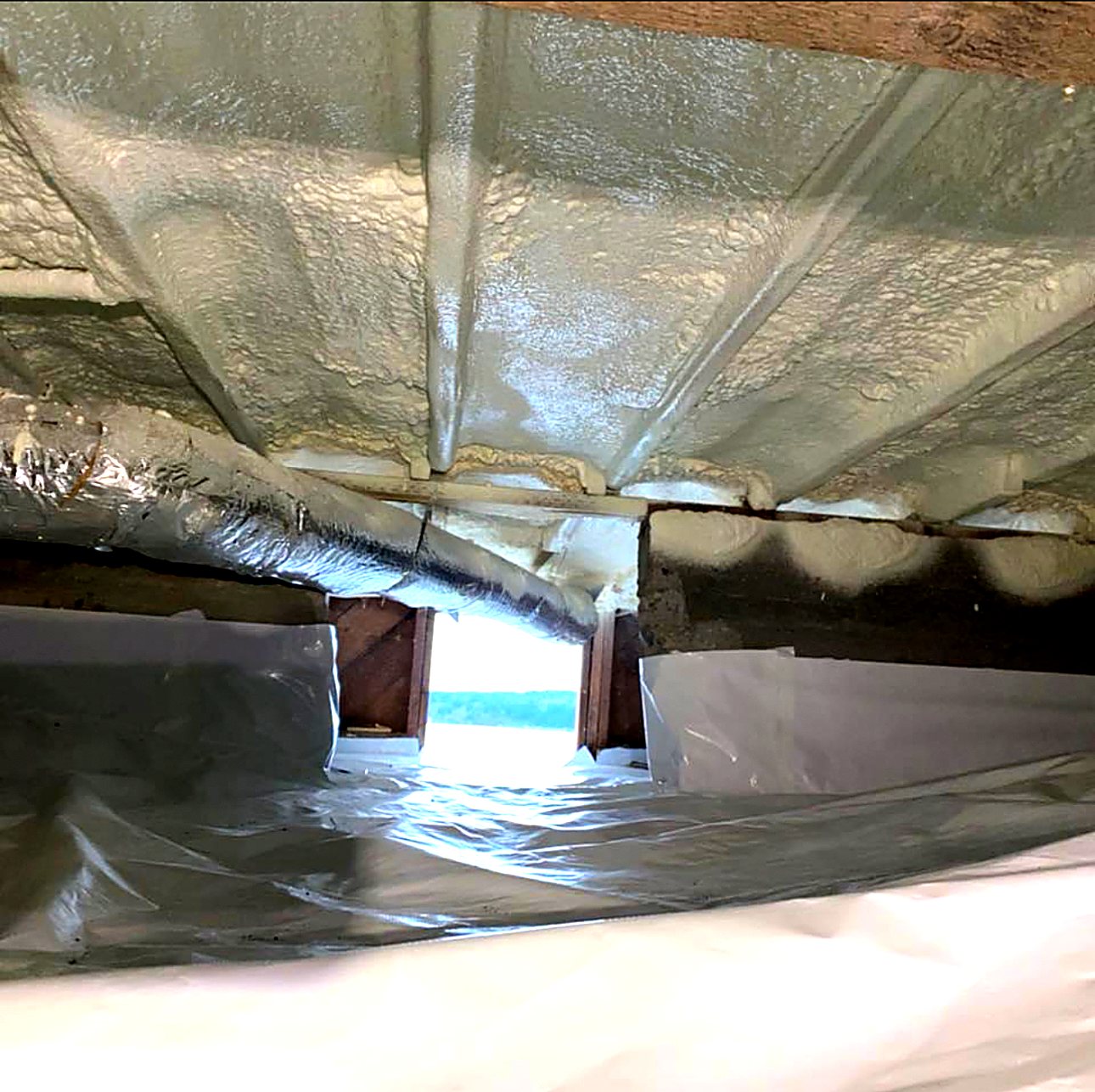
Crawl space sealed with new liner around a vent opening

Recent Work

Sealed Crawl Space Projects

Crawl spaces from homes across Skagit, Whatcom, Whidbey Island, Snohomish and King County. Click any photo to enlarge it.

See the Full Gallery

Good Questions

Encapsulation FAQs

What is the difference between a vapor barrier and encapsulation?
A vapor barrier is one component. Encapsulation is the whole system. A vapor barrier is sheeting laid over the dirt floor to slow moisture coming up out of the ground — useful, but the crawl space is still vented to outside air, and in a wet Northwest Washington winter that air carries plenty of moisture of its own. Encapsulation seals the entire space: a heavy reinforced liner across the floor and up the walls, taped and mechanically fastened, vents closed off, rim joists sealed, the access door weather-stripped, and humidity actively managed. You end up with a semi-conditioned space rather than a hole under your house that breathes outdoor air.
Do I really need to seal the foundation vents?
In this climate, usually yes. Vents were originally required on the theory that outside air dries a crawl space out. In practice, on a humid summer day in Skagit or Whatcom County that warm outside air hits the cool crawl space surfaces and condenses — the vents make the space wetter, not drier. Sealing them is what makes the rest of the system work. Note that if you have any combustion appliance drawing air from the crawl space, that has to be addressed before the vents are closed, and we will flag it at the assessment.
Will encapsulation fix standing water?
No, and any contractor who tells you otherwise is selling you a problem. A liner over standing water traps it. If water is entering the crawl space, the water has to be managed first — usually with interior drainage and a sump pump, sometimes with exterior grading or downspout work. Once the bulk water is under control, encapsulation handles what is left.
Does an encapsulated crawl space need a dehumidifier?
Often, but not always. Sealing the space cuts the moisture load dramatically, and in some houses that is enough on its own. Where the space still runs above about 60% relative humidity — the point at which mould becomes a real risk — a dedicated crawl space dehumidifier is what holds it in range. We would rather seal properly first and measure than sell you equipment you do not need.
Can I still store things or run services under there?
Yes, and that is one of the side benefits. An encapsulated crawl space is dry, light-coloured and clean enough to walk through without ruining your clothes. It also makes future plumbing, electrical and HVAC work considerably easier for whoever has to do it.
How long does encapsulation take?
Most single-family crawl spaces take two to three days once the space is cleared. Heavy contamination, standing water, very tight access or drainage work will add to that. You get a realistic timeline in the written estimate rather than an optimistic one.
Is encapsulation worth it in Northwest Washington?
This is one of the better regions in the country for it. We have a high water table, a long wet season and a huge stock of homes built over vented crawl spaces with bare soil floors. Roughly half the air you breathe upstairs started in the crawl space, so what happens down there does not stay down there.

Free Estimate

Seal It Properly, Once

We get under the house, measure the humidity, photograph what is actually there, and tell you honestly whether you need full encapsulation or just a good ground cover.

Call or text(425) 319-2029

Request Your Free Estimate

Same-day replies during business hours.

A photo of your crawl space or attic helps us quote faster. One photo (we resize it for you) or a PDF up to 3 MB.

Prefer to talk? Call or text (425) 319-2029. Free estimates — no obligation.Some locations require extra drive time, so a travel charge may apply — we’ll always let you know up front.