
Skip to content

Attic Service

Attic Insulation

Heat rises. In most Washington homes the attic is where the largest share of it leaves, and it is usually the cheapest place to get it back.

Keep your home warm and comfortable with attic insulation installed by an experienced local crew — quality workmanship and dependable service from estimate to completion.

Why The Attic First

The Highest-Return Upgrade In Most Homes

An under-insulated attic costs you money in both directions. In winter, heated air rises through the ceiling and escapes through the roof. In summer, a superheated attic radiates back down into the rooms below.

Attics are also the easiest place to do the work well, because in most homes the floor is open and accessible. That combination — large heat loss, straightforward access — is why an attic top-up is usually the first thing we recommend when a homeowner asks where to start.

We bring the depth up to code, keep the soffit vents clear with baffles, seal the hatch, and leave depth rulers in place so the installed R-value can be verified rather than taken on trust.
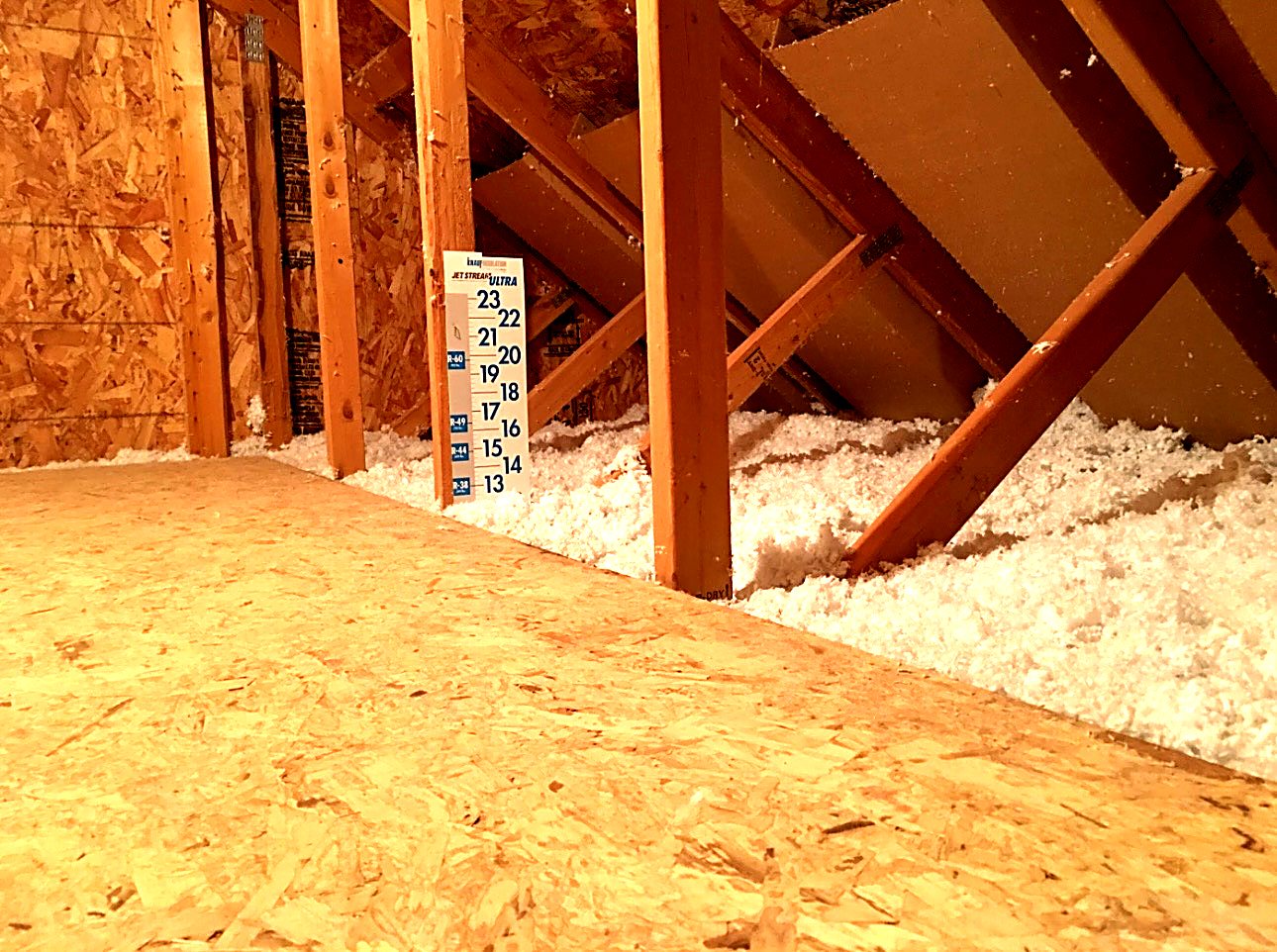
Blown-in attic insulation installed to a measured depth
R-49Code target, WA

Why Homeowners Choose Us

Attic Work Done Properly

Highly Experienced Crew

Decades of combined experience in Northwest Washington attics — including the low-clearance, awkward-access ones nobody else wants to quote.

Free Estimates

We get into the attic, measure the existing depth, photograph the condition, and give you a written number with no obligation attached.

Local and Accountable

A family-run local company focused on customer satisfaction. The person who quotes your job is the person you call if anything needs revisiting.

Benefits

What Attic Insulation Changes

Removing old insulation

Removing old, damaged or wet attic insulation improves attic performance, indoor air quality and long-term home comfort.

  • Improved indoor air quality
  • Damaged, deteriorated and wet material removed
  • Mould and mildew growth prevented
  • Enhanced energy efficiency
  • Odour issues eliminated

Insulating your attic

Professional attic insulation reduces energy loss and keeps indoor temperatures consistent in every season.

  • Attic energy efficiency
  • Improved indoor comfort
  • Attic moisture control
  • Attic noise reduction
  • Enhanced indoor air quality
  • Increased home value

Sealing and insulating ducts

When air ducts are sealed and insulated correctly, your HVAC system delivers conditioned air more efficiently with less waste.

  • Energy savings
  • Improved indoor air quality
  • Noise reduction
  • Increased airflow efficiency

How It Runs

The Attic Process, Step By Step

1

Measure & Inspect

We measure existing depth, check for moisture, rodent activity, blocked soffit vents and unsealed penetrations.

2

Remove If Needed

Failed or contaminated material is vacuumed or bagged out and disposed of the same day.

3

Seal & Baffle

Top plates, penetrations and the hatch are sealed; baffles go in at the eaves to protect ventilation.

4

Insulate & Verify

New insulation installed to the agreed depth, depth rulers left in place, and photos provided at completion.

Our Attic Projects

Attic Gallery

Attic and upper-level insulation work from homes across our service area. Click any photo to view it full size.

See the Full Gallery

Good Questions

Attic Insulation FAQs

How much attic insulation should I have?
Washington’s energy code targets roughly R-49 in the attic for our climate zone — around 16 to 18 inches of blown fiberglass depending on the product. Many homes in Skagit and Whatcom County were built to R-19 or R-30 and never topped up. If you can see the tops of the ceiling joists, you are short.
Can you just add insulation on top of what is there?
If the existing material is dry, clean and evenly distributed, yes — topping up is often the most cost-effective option. If it is wet, mouldy, rodent-contaminated or badly compressed, it has to come out first. Adding new material over failed insulation traps the problem and wastes your money.
Blown-in or batts — which is better for an attic?
For an open attic floor, blown-in loose fill almost always performs better in practice. It flows around wiring, framing and irregular shapes that batts have to be cut around, and gaps are what kill real-world R-value. Batts still make sense where the attic floor is partly finished or access is limited.
Will you block my soffit vents?
No. We install baffles at the eaves so soffit ventilation stays open. Blocking them is a common shortcut that leads to moisture problems and ice damming, and it is one of the first things we check on an existing attic.
Do you insulate the attic hatch?
Yes, and it matters more than people expect. An uninsulated, un-weather-stripped hatch is a hole straight into the attic. We insulate and seal it as part of the job.
What about the ductwork running through the attic?
We seal leaks, re-support sagging runs and wrap ducts to the required R-value. Ductwork in an unconditioned attic that leaks or is bare is throwing away air you have already paid to heat.

Free Estimate

Warmer Rooms, Lower Bills

Tell us what you need — we respond quickly with clear next steps and no high-pressure pitch.

Call or text(425) 319-2029

Request Your Free Estimate

Same-day replies during business hours.

A photo of your crawl space or attic helps us quote faster. One photo (we resize it for you) or a PDF up to 3 MB.

Prefer to talk? Call or text (425) 319-2029. Free estimates — no obligation.Some locations require extra drive time, so a travel charge may apply — we’ll always let you know up front.