



Crawl Space Service
Crawl Space Insulation
Cold floors, a musty smell, and a heating bill that keeps climbing usually trace back to the same place: the space under your floor.
We strip out what has failed, fix the moisture source underneath it, and install new insulation that is supported properly so it stays where we put it.
The Local Problem
Why Crawl Space Insulation Fails Here
Northwest Washington does not get the extreme cold that damages insulation elsewhere. What it gets is damp — a high water table, months of rain, and thousands of homes built over vented crawl spaces with bare soil floors.
Soil releases moisture continuously. That moisture rises into the floor system, condenses on cool surfaces, and soaks into the fiberglass batts stapled between the joists. Wet fiberglass loses most of its R-value, gets heavy, sags out of contact with the subfloor, and stops working long before it looks obviously ruined from below.
That is why our crawl space work is never just insulation. We deal with the ground cover, the access door, the rim joists and the ducts at the same time — because putting new batts into the same conditions that destroyed the last set is not a repair.
Scope of Work
What a Crawl Space Job Includes
Removal & Clean-Out
- Old batt insulation removed and bagged at the source
- Failed or displaced ground cover pulled out
- Construction debris left behind by earlier trades
- Rodent droppings, nesting material and contaminated insulation
- Floors and entry route protected throughout
- Everything hauled away the same day
Insulation & Sealing
- Unfaced or faced fiberglass batts sized to the joist bays
- Supported with twine, wire or netting so it cannot sag
- Rim joists and band joists insulated and sealed
- Water lines wrapped where freezing is a risk
- Crawl space access door insulated and weather-stripped
- Entry points sealed against rodents
Vapor Barrier & Ground Cover
- Heavy-gauge polyethylene lapped and sealed
- Carried up and fastened to the stem walls
- Sealed around piers, posts and penetrations
- Existing barrier repaired where it is sound
- Drainage and standing-water issues reported
- Sump work coordinated where required
Ducts & Services
- Duct leaks at joints, boots and plenums sealed
- Crushed or disconnected runs repaired and re-supported
- Insulated duct wrap to the required R-value
- Dryer venting corrected where it discharges below the house
- Floor penetrations sealed
- Improved airflow to rooms at the end of long runs
The Payoff
What You Get Out Of It
Removing the old insulation
- Improved indoor air quality — crawl space air ends up upstairs
- Wet, deteriorated and compressed material gone
- Mould and mildew growth halted at the source
- Musty odours eliminated rather than covered up
- A clean cavity you can actually inspect later
Insulating it properly
- Noticeably warmer floors — the first thing customers report
- Lower heating bills through the coldest months
- Better moisture control under the whole house
- Less appeal to rodents and other pests
- Reduced noise transfer through the floor
- Protected plumbing and stronger resale position
Recent Work
Crawl Space Projects
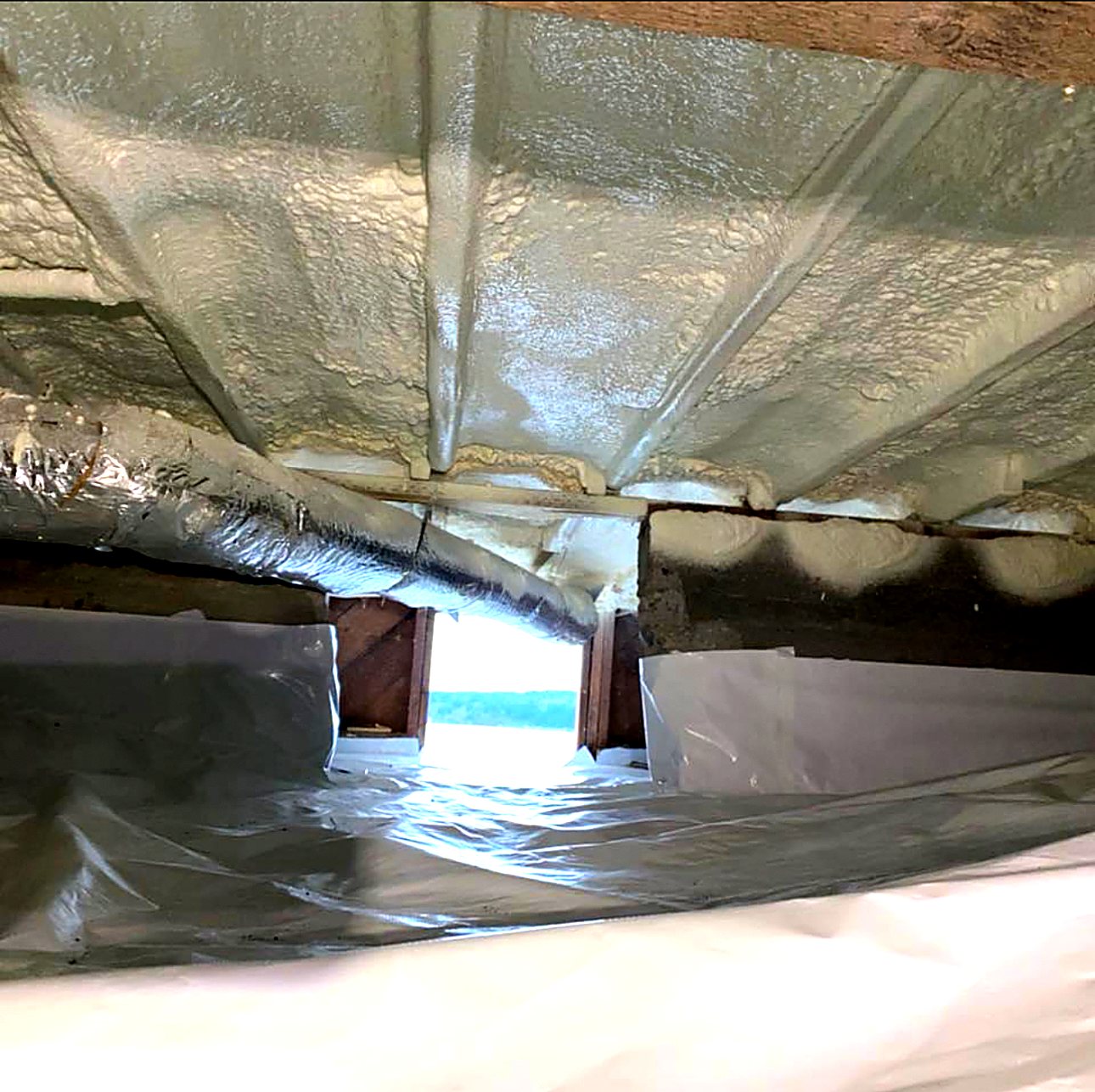
Real crawl spaces from homes across Skagit, Whatcom, Whidbey Island, Snohomish and King County. Click any photo to enlarge it.
Good Questions
Crawl Space FAQs
How do I know my crawl space insulation needs replacing?
Do I need a vapor barrier as well as insulation?
What R-value should crawl space insulation be?
How long does a crawl space job take?
Will you remove the old insulation and haul it away?
What if there is standing water or a drainage problem?
Free Estimate
Get Your Crawl Space Looked At
We come out, get under the house, photograph what is actually there and give you a written number. Free, and there is no obligation attached to it.
Call or text(425) 319-2029Request Your Free Estimate
Same-day replies during business hours.