
Skip to content

What We Do

Insulation Services

From a single attic top-up or insulating your walls to a full crawl space strip-out, vapor barrier and reinstall — RGS Crawl Space Insulation LLC covers the whole job, including the parts other contractors leave for someone else.

Every service below is available across Skagit, Whatcom, Whidbey Island, Snohomish and King County, and every one of them starts with a free on-site assessment.

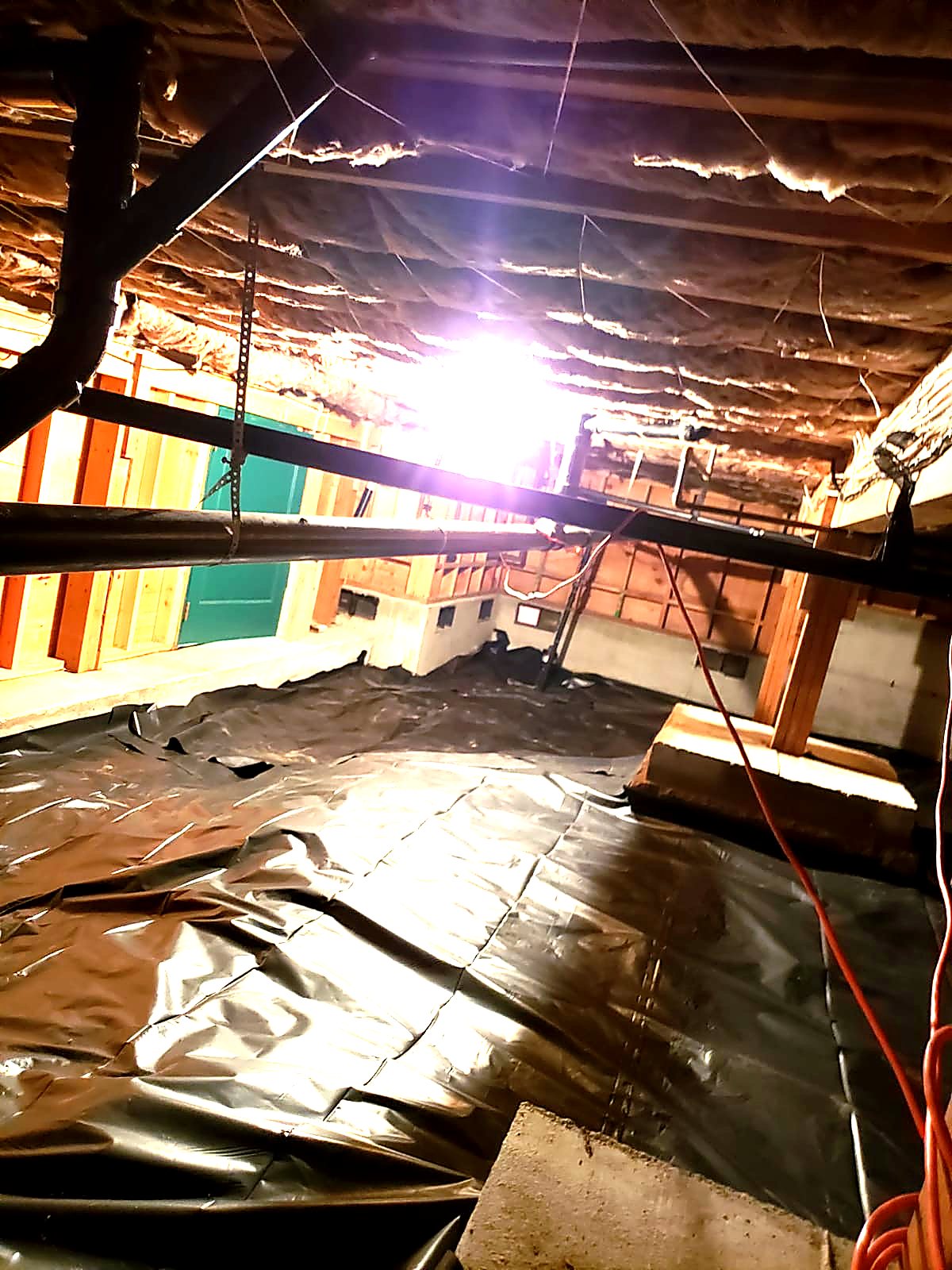
Finished crawl space with new under-floor insulation

Crawl Space Insulation

The service we are named for. We insulate the floor system above the crawl space so the heat you pay for stays in the rooms you live in, and we fix the conditions underneath that destroyed the last set of insulation.

  • Old batts removed, bagged at the source and hauled away
  • Unfaced or faced fiberglass batts sized to the joist bays
  • Insulation supported with twine, wire or netting so it never sags
  • Rim joists, band joists and crawl space access hatches insulated
  • Water lines wrapped where freezing is a risk
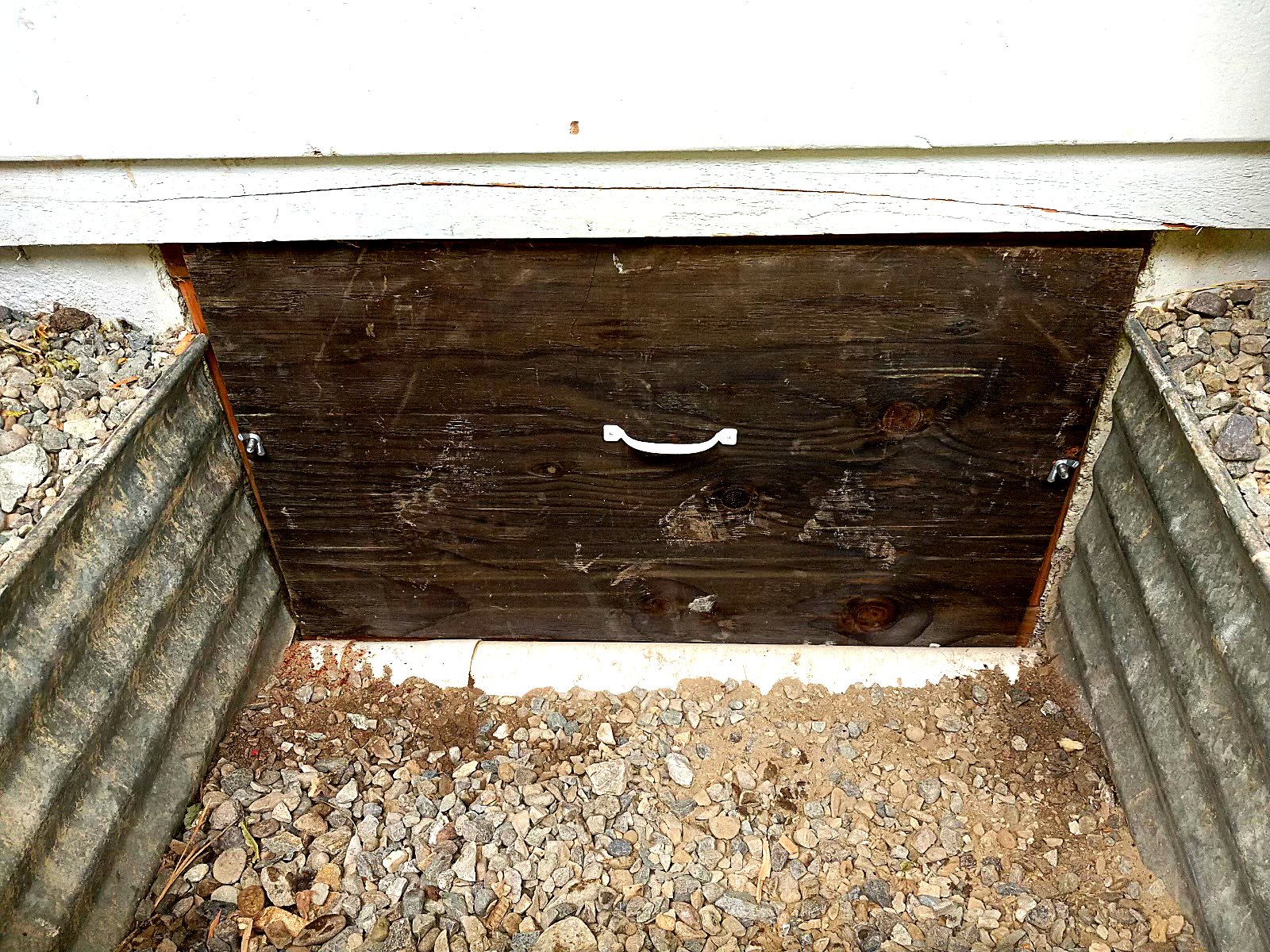
  • New ground cover and sealed access door where needed

Every crawl space is different, so we give you a realistic timeline with your estimate. See the crawl space insulation page for the full detail.

Crawl Space Encapsulation

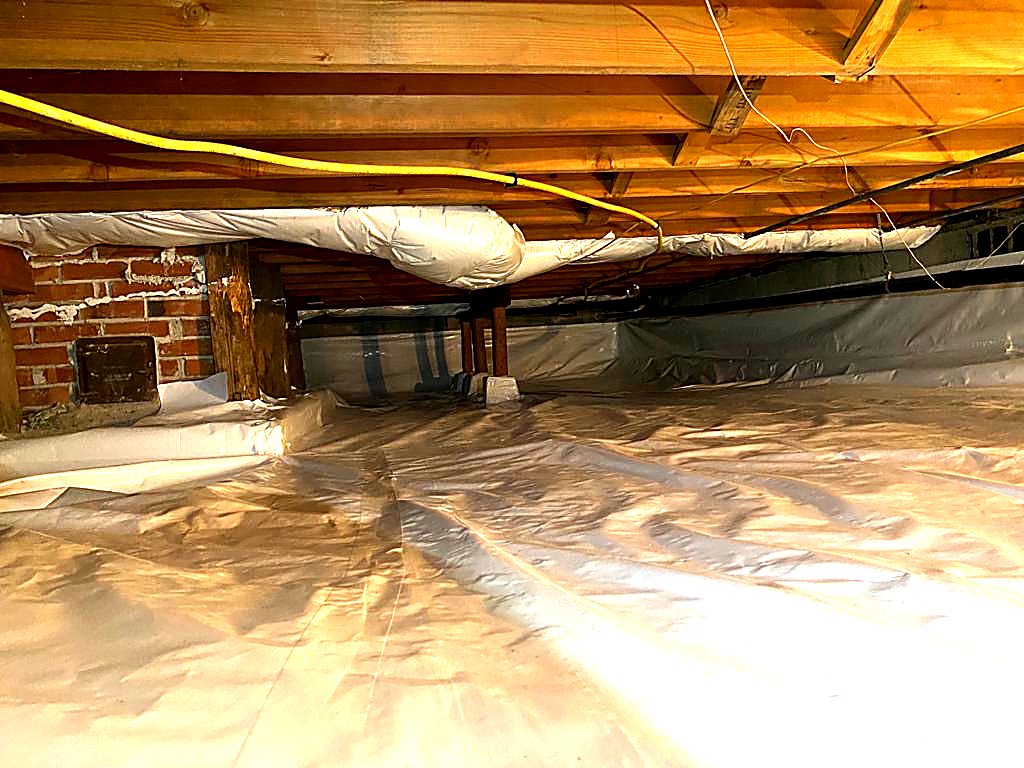
The full version of a vapor barrier. A reinforced liner sealed across the floor and up the walls, foundation vents closed off, rim joists air-sealed and humidity held in a safe range — so the space under your floor stops breathing damp outdoor air.

  • Heavy-gauge reinforced liner on the floor and stem walls
  • Seams lapped, taped and mechanically fastened
  • Foundation vents sealed and rim joists air-sealed
  • Access door insulated and weather-stripped
  • Humidity measured and held below the mould threshold
  • Drainage handled first where groundwater is getting in

See the crawl space encapsulation page for the full system, the warning signs, and how it compares with a plain vapor barrier.

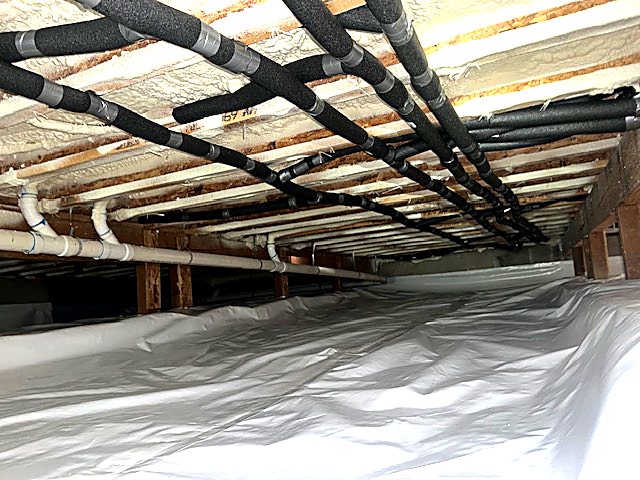
Sealed crawl space with reinforced liner
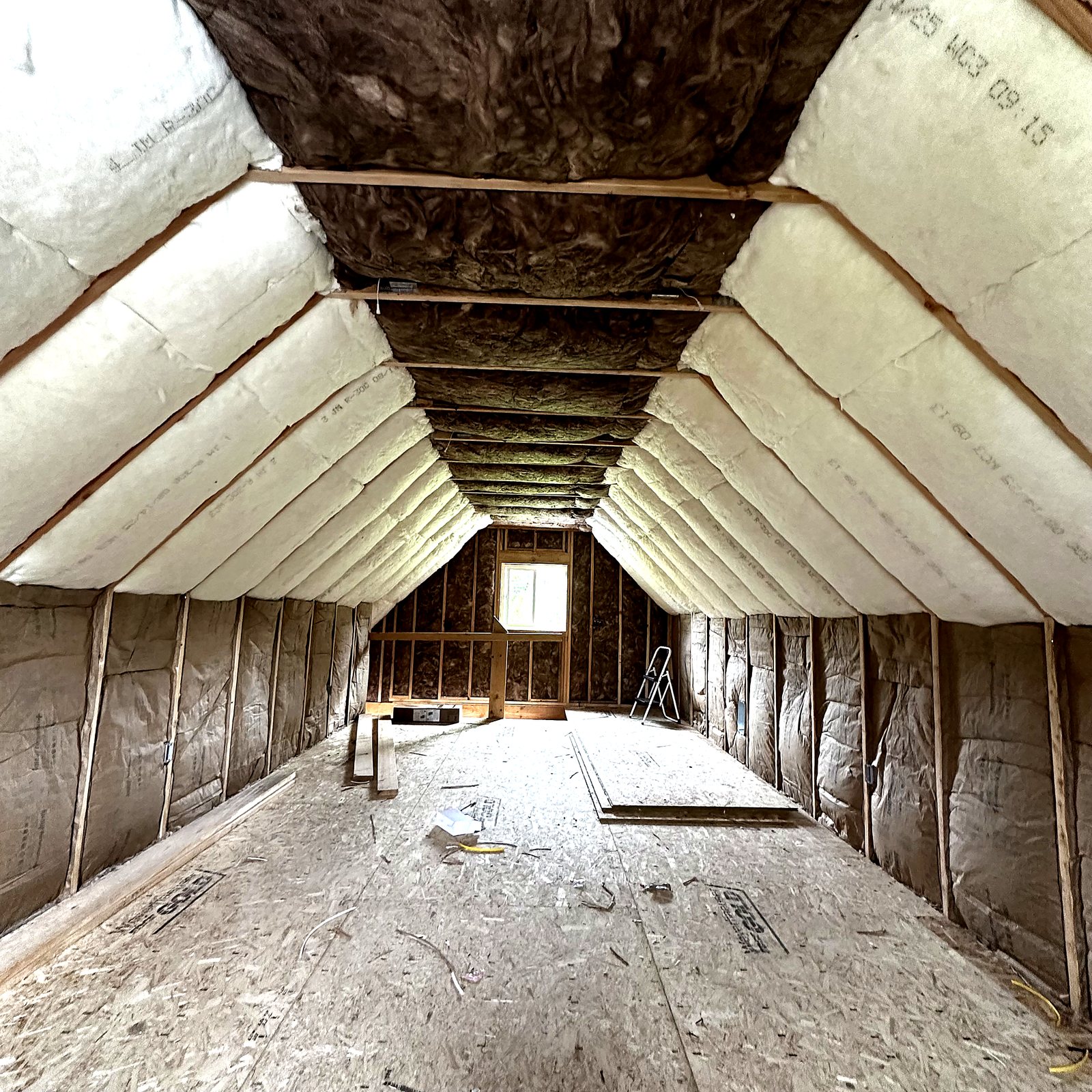
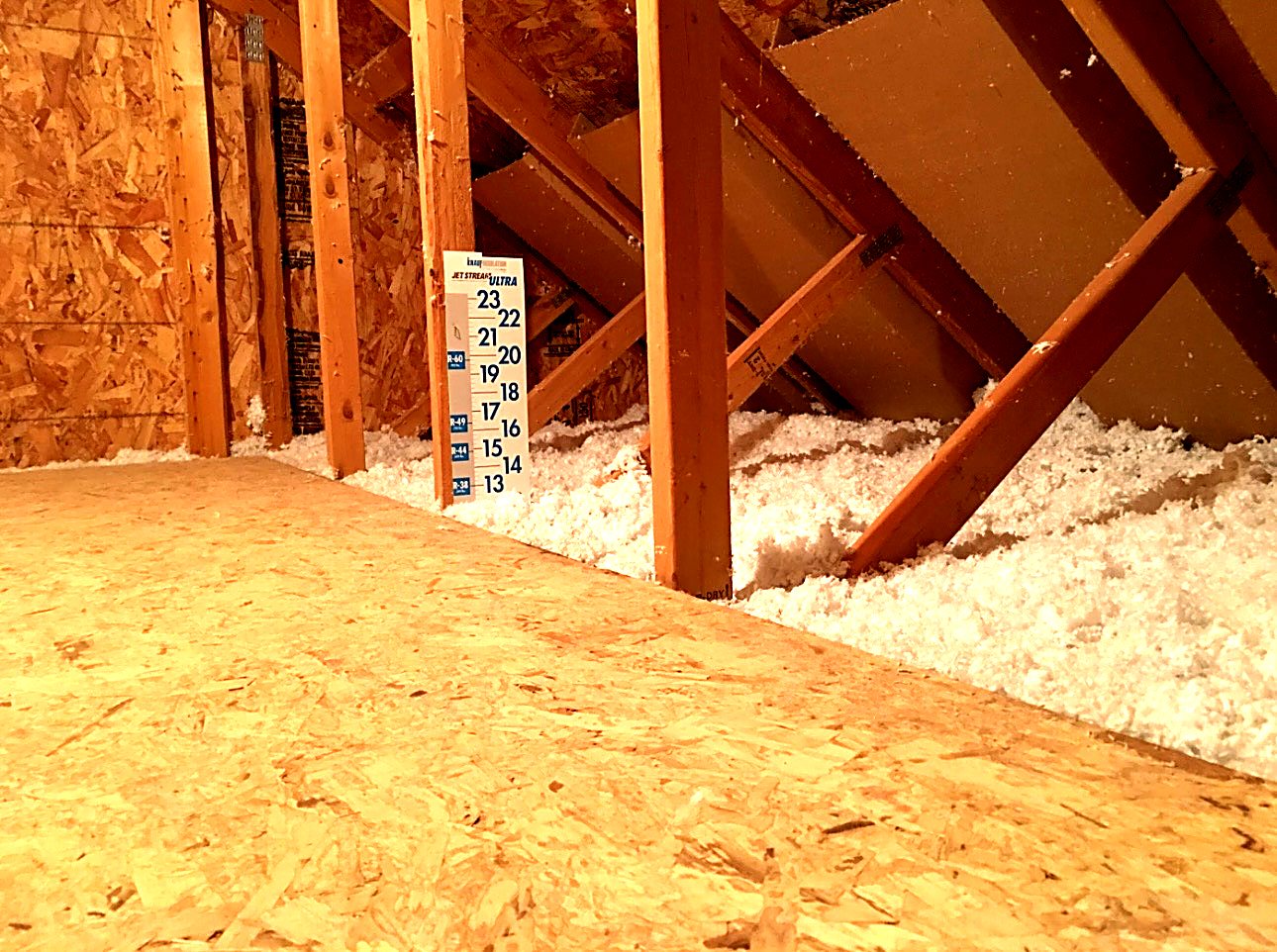
Attic insulation upgrade in progress

Attic Insulation

Heat rises, so the attic is where most homes lose the most. Bringing an under-insulated attic up to modern depth is usually the single best-value insulation upgrade available to a Washington homeowner.

  • Blown-in loose-fill fiberglass to a measured, marked depth
  • Batt insulation where the attic floor is finished or accessible only in part
  • Baffles at the eaves so soffit ventilation is not blocked
  • Attic hatch insulated and weather-stripped
  • Recessed lights, flues and chimneys kept safely clear
  • Depth rulers left in place so the installed R-value is verifiable

See the attic insulation page for benefits, materials and project photos.

Insulation Removal & Clean-Out

New insulation installed over failed insulation is money thrown away. Anything wet, compressed, mouldy, smoke-damaged or rodent-contaminated has to come out first — and it has to come out cleanly.

  • Vacuum removal of blown-in attic insulation
  • Hand removal and bagging of batt insulation
  • Removal of construction debris left by earlier trades
  • Rodent droppings, nesting material and contaminated ground cover
  • Containment and floor protection through the house
  • Same-day disposal — nothing is left in your driveway

This is the least glamorous part of the job and the part that makes the biggest difference to what happens next.

Contaminated insulation and debris before removal
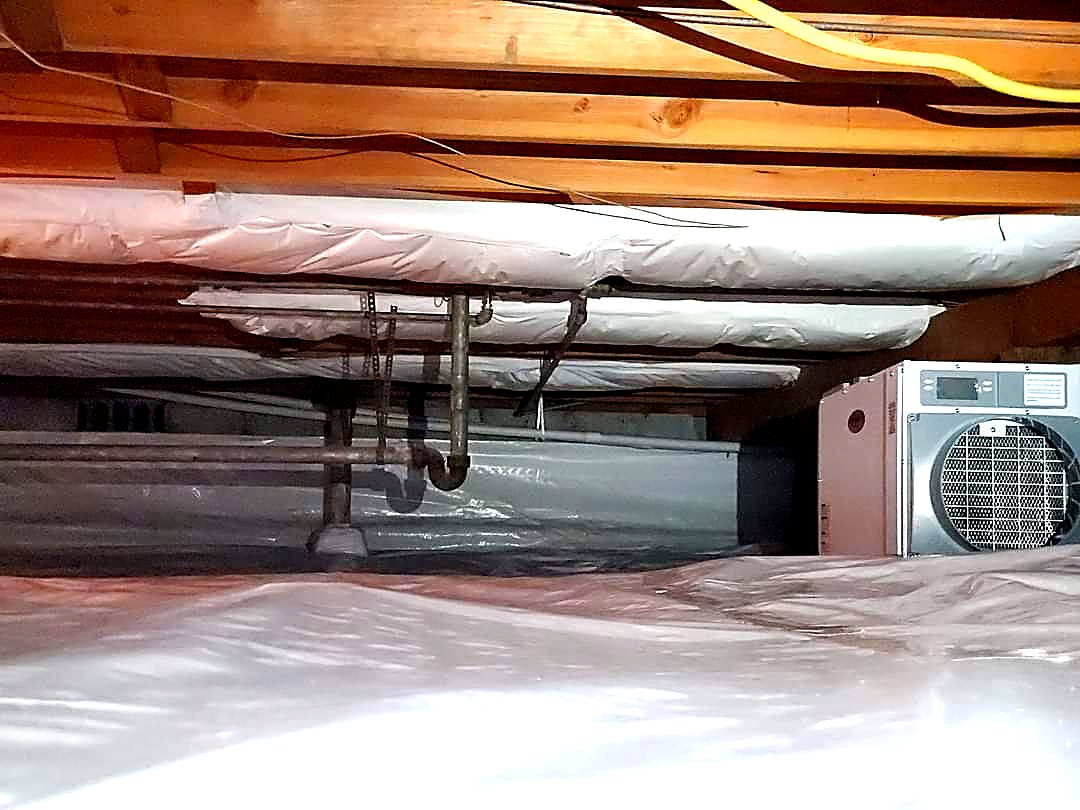
Heavy-gauge vapor barrier sealed across a crawl space floor

Vapor Barrier & Ground Cover

Bare soil in a Northwest Washington crawl space releases moisture into the floor system every single day. Until that stops, no insulation you install underneath is going to last.

  • Heavy-gauge polyethylene ground cover, lapped and sealed
  • Barrier carried up and fastened to the stem walls
  • Sealed around piers, posts, plumbing and duct penetrations
  • Damaged or displaced existing barrier repaired or replaced
  • Standing-water and drainage issues identified and reported
  • Sump and drainage work coordinated where required

Ground cover is cheap compared with replacing insulation twice. We rarely recommend insulating a crawl space without it.

Sump Pumps & Crawl Space Drainage

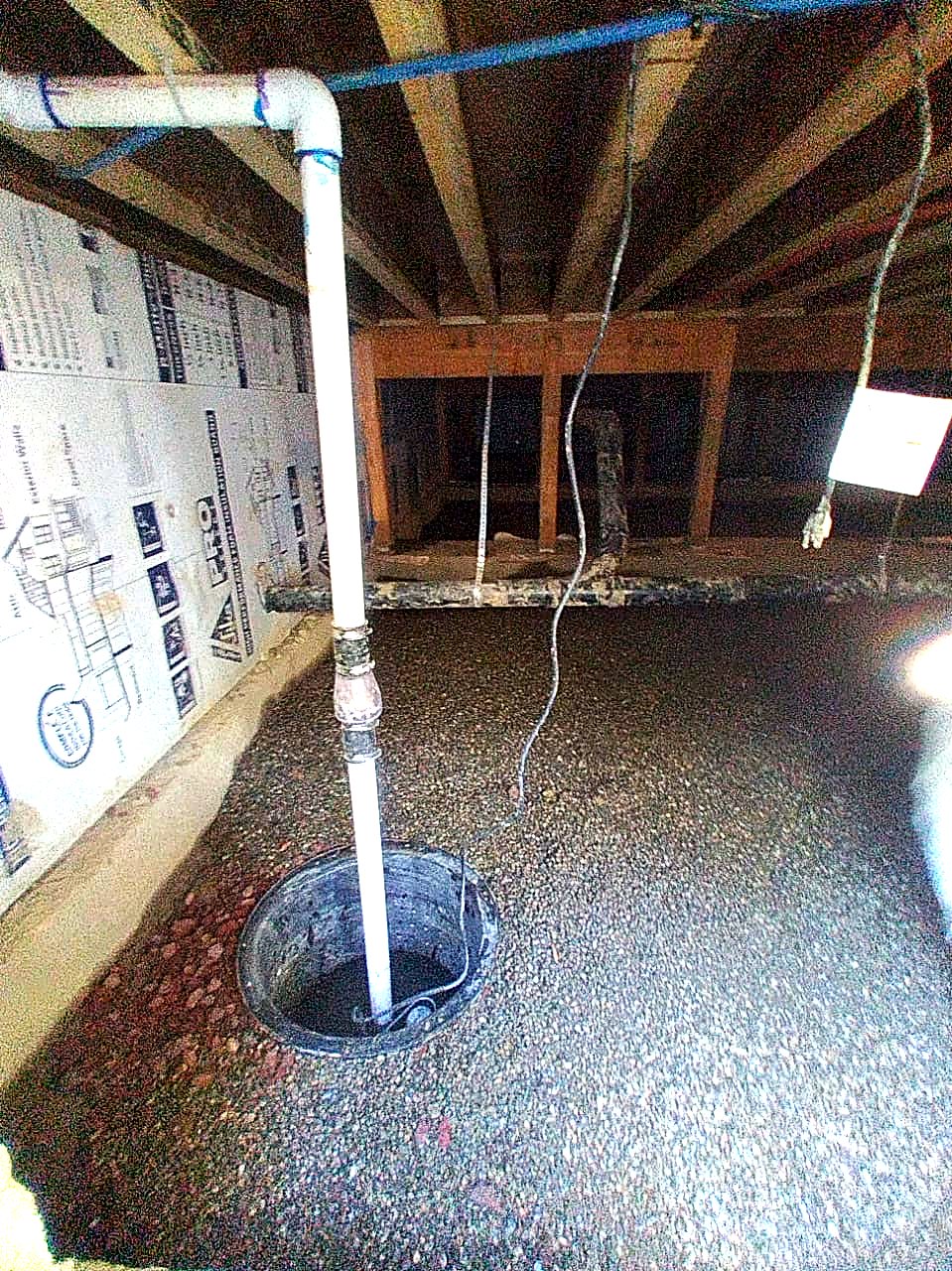
No amount of insulation fixes a crawl space that fills with water every winter. Where groundwater is getting in, it has to be collected at the low point and pumped back outside before anything else down there will last.

  • Sump basin set into the lowest point, with a sealed lid
  • Pump sized to the volume the space actually takes on
  • Check valve so pumped water cannot run back down
  • Discharge line routed well clear of the foundation
  • Battery backup and high-water alarm for storm-season outages
  • Interior perimeter drainage feeding the basin where needed

See the sump pump and drainage page for how the system works, the warning signs, and the order the work should be done in.

Sump basin and discharge line set into a crawl space floor
Blown-in insulation being installed

Blown-In & Batt Insulation

Different assemblies want different materials. We choose based on the cavity, the access and what the building actually needs — not on whatever happens to be on the truck.

  • Loose-fill fiberglass blown to a measured depth in open attics
  • Faced and unfaced fiberglass batts for joist bays and stud cavities
  • Mineral wool where fire resistance or sound control is the priority
  • Rigid foam board at rim joists and thermal bridges
  • Materials from Johns Manville, Owens Corning and Knauf
  • Formaldehyde-free options available on request

We will tell you the R-value you are getting per inch and the total installed R-value, in writing, before we start.

Spray Foam & Rigid Foam

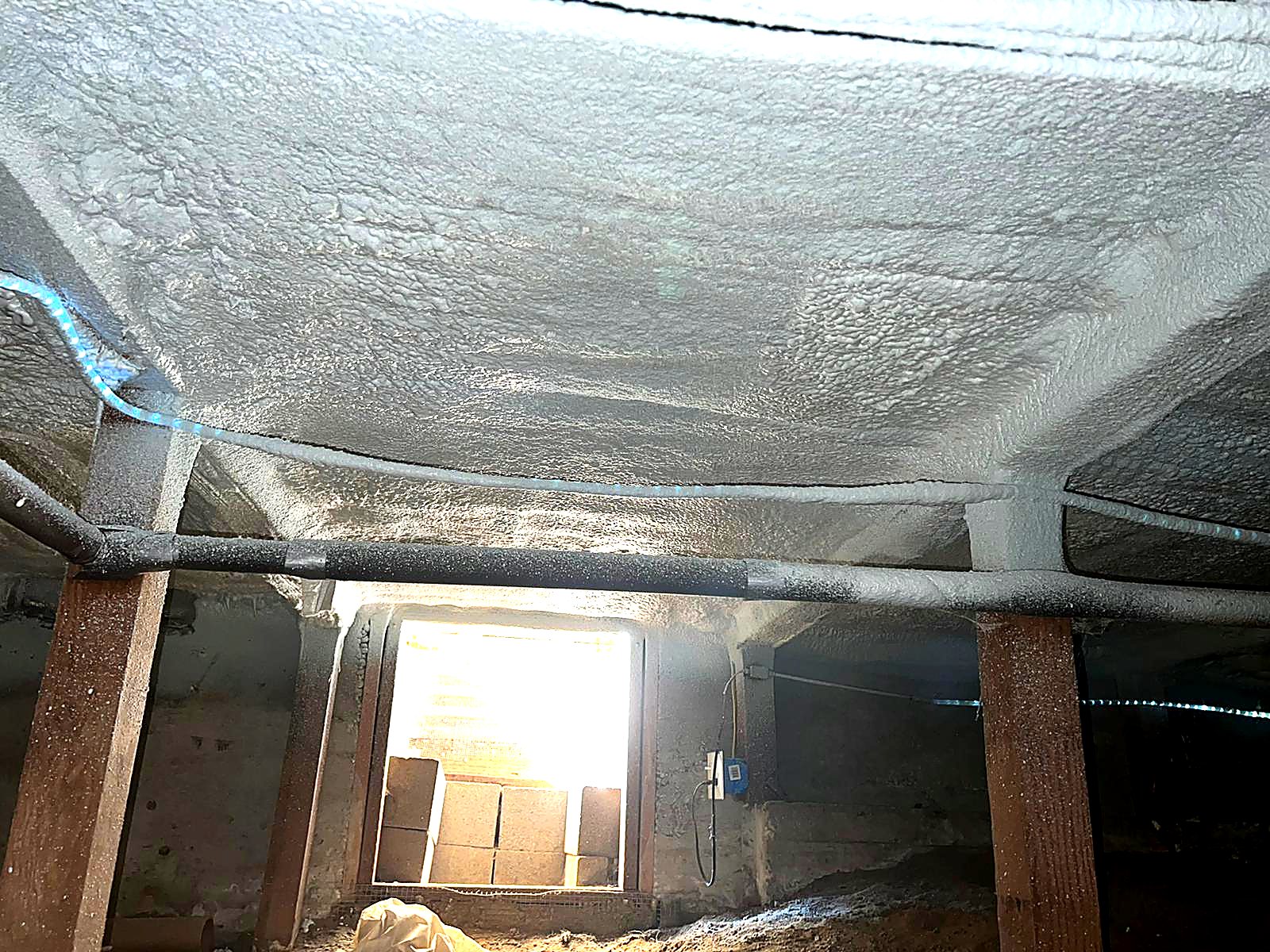
Nothing else matches foam for R-value per inch combined with air sealing, which makes it the right answer for tight spaces, irregular cavities and assemblies where a batt simply cannot be made to fit.

  • Closed-cell foam where high R-value in a shallow cavity is required
  • Air sealing and insulation achieved in a single application
  • Rim joists, band joists and hard-to-reach cavities
  • Rigid board at foundation walls and thermal breaks
  • Adds structural stiffness and resists bulk water
  • Combined foam-and-batt assemblies where that is the better value

Foam is not always the right call. Where a well-installed batt does the same job for less, we will say so.

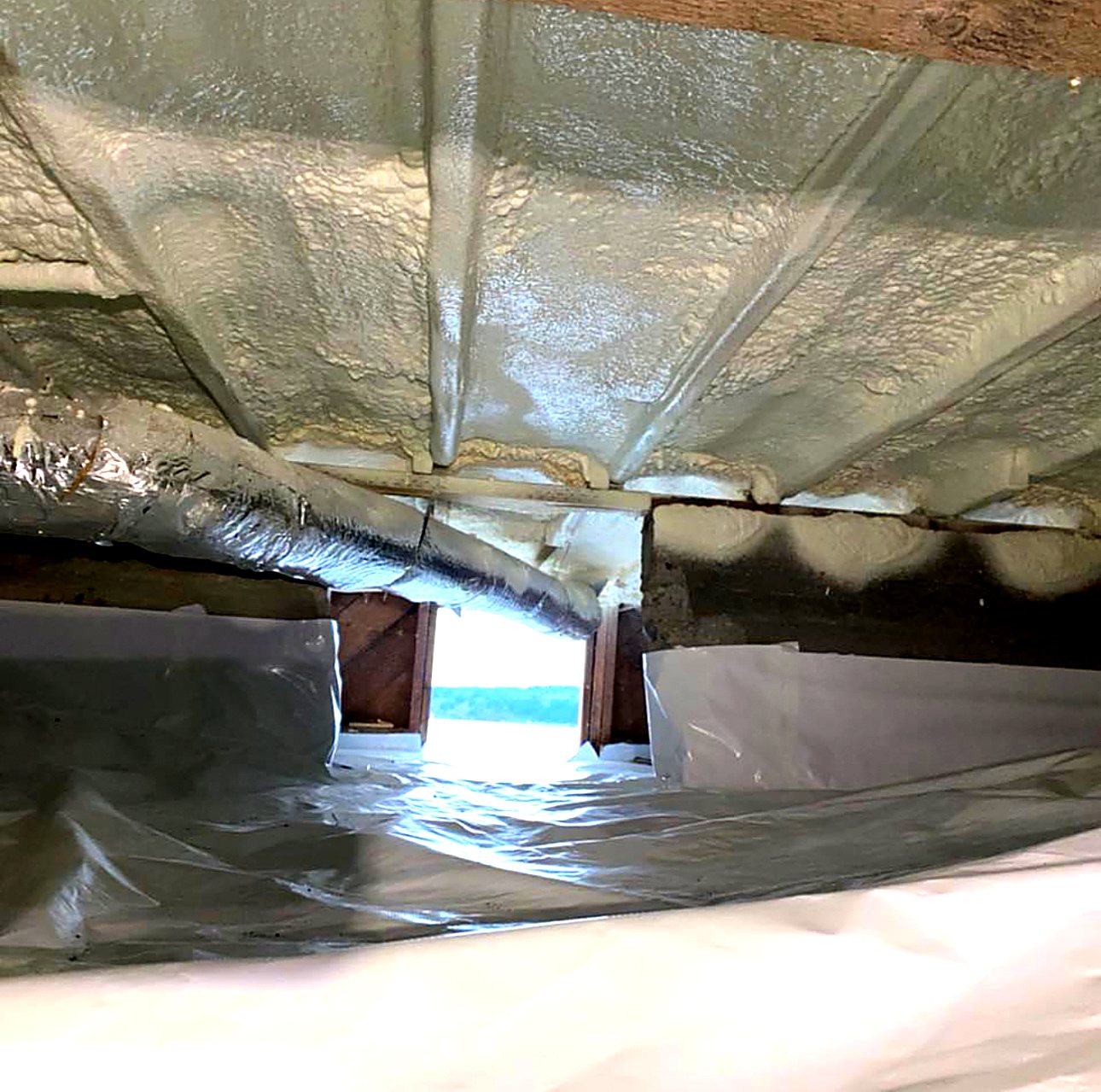
Spray-applied insulation under a crawl space floor
Rim joist and stem wall sealing detail

Air Sealing

Insulation slows heat moving through a surface. It does very little about air moving straight past it. Sealing the leaks first is what makes the insulation perform the way the label says it will.

  • Top plates, wire and pipe penetrations sealed at the attic floor
  • Rim and band joists sealed at the crawl space
  • Attic hatches and crawl space access doors weather-stripped
  • Duct chases, flues and plumbing stacks detailed
  • Gaps around chimneys and can lights addressed safely
  • Crawl space entry points closed against rodents

Air sealing is inexpensive relative to the comfort difference it makes, and it is done before the insulation goes back in.

Duct Sealing & Insulation

Ductwork running through an unconditioned crawl space or attic is the last place you want leaks. Air you have already paid to heat escapes before it reaches the room it was intended for.

  • Leaks at joints, boots and plenums sealed
  • Crushed, disconnected or sagging runs repaired and re-supported
  • Insulated duct wrap installed to the required R-value
  • Registers and boots sealed to the floor or ceiling
  • Dryer venting corrected where it discharges into the crawl space
  • Improved airflow and quieter operation

Homeowners often notice this one faster than the insulation itself: rooms at the end of a long duct run finally get warm.

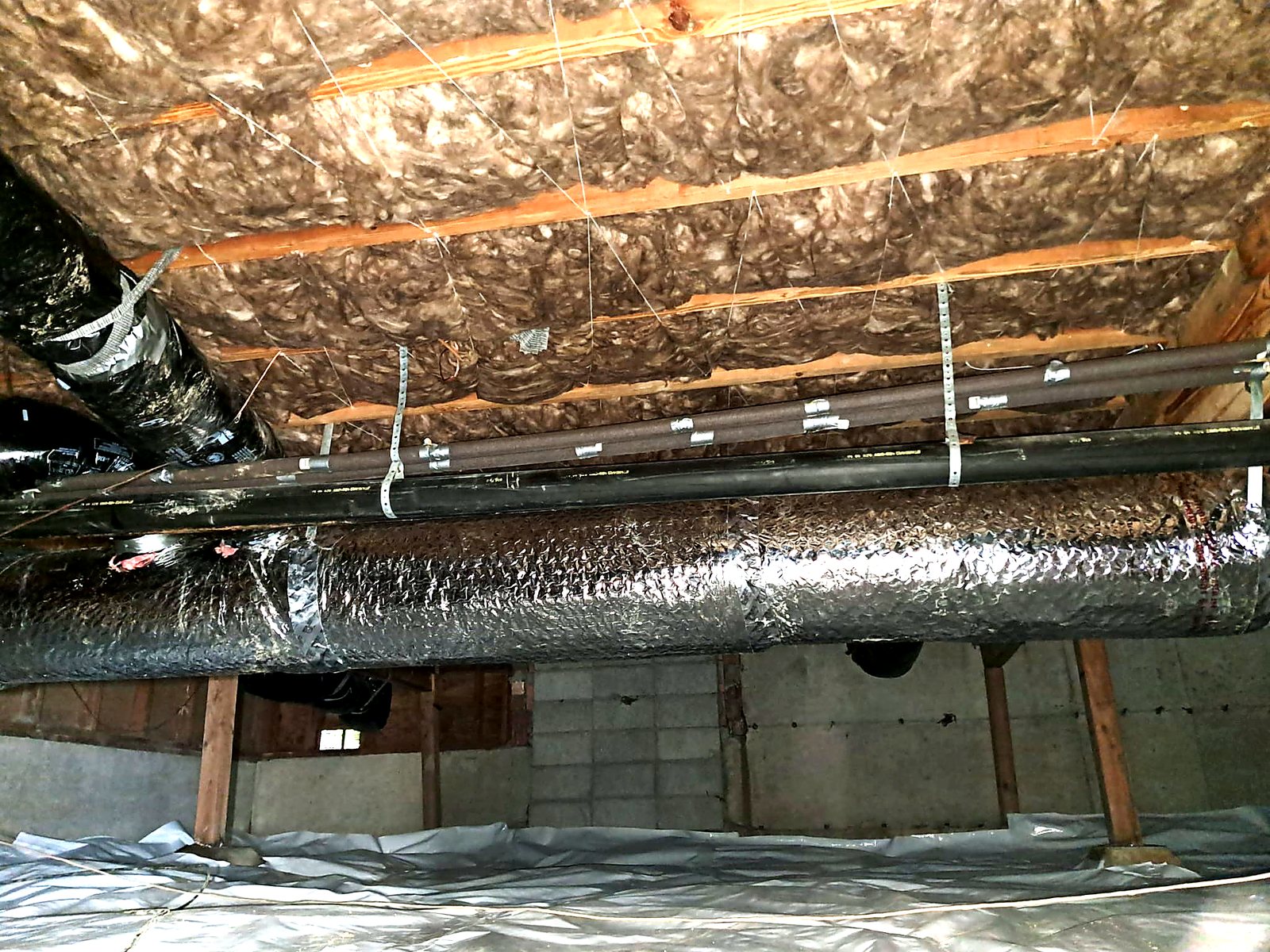
Insulated ductwork above a new crawl space vapor barrier
Joist bays stripped back after rodent contamination

Rodent Damage Restoration

Rodents in a crawl space or attic ruin insulation quickly. The material becomes contaminated, it loses its loft, and the smell finds its way into the house through the floor.

  • Contaminated insulation and nesting material removed and bagged
  • Droppings and debris cleaned out of the affected area
  • Affected surfaces cleaned and deodorised
  • Entry points identified and reported with photos
  • Access doors, vents and penetrations sealed
  • Fresh insulation and new ground cover installed

We will show you where they were getting in. Replacing insulation without closing the entry points only buys you a couple of years.

Sound Control Insulation

The same material that slows heat also slows sound. Insulating interior walls and floors is a straightforward way to quieten a busy house.

  • Interior walls between bedrooms, offices and living areas
  • Floor systems between storeys and above garages
  • Mineral wool batts where sound absorption is the priority
  • Media rooms, home offices and shared walls
  • Works alongside standard thermal insulation
  • Best done during a remodel while cavities are open

If you are already opening walls for another reason, this is the cheapest it will ever be.

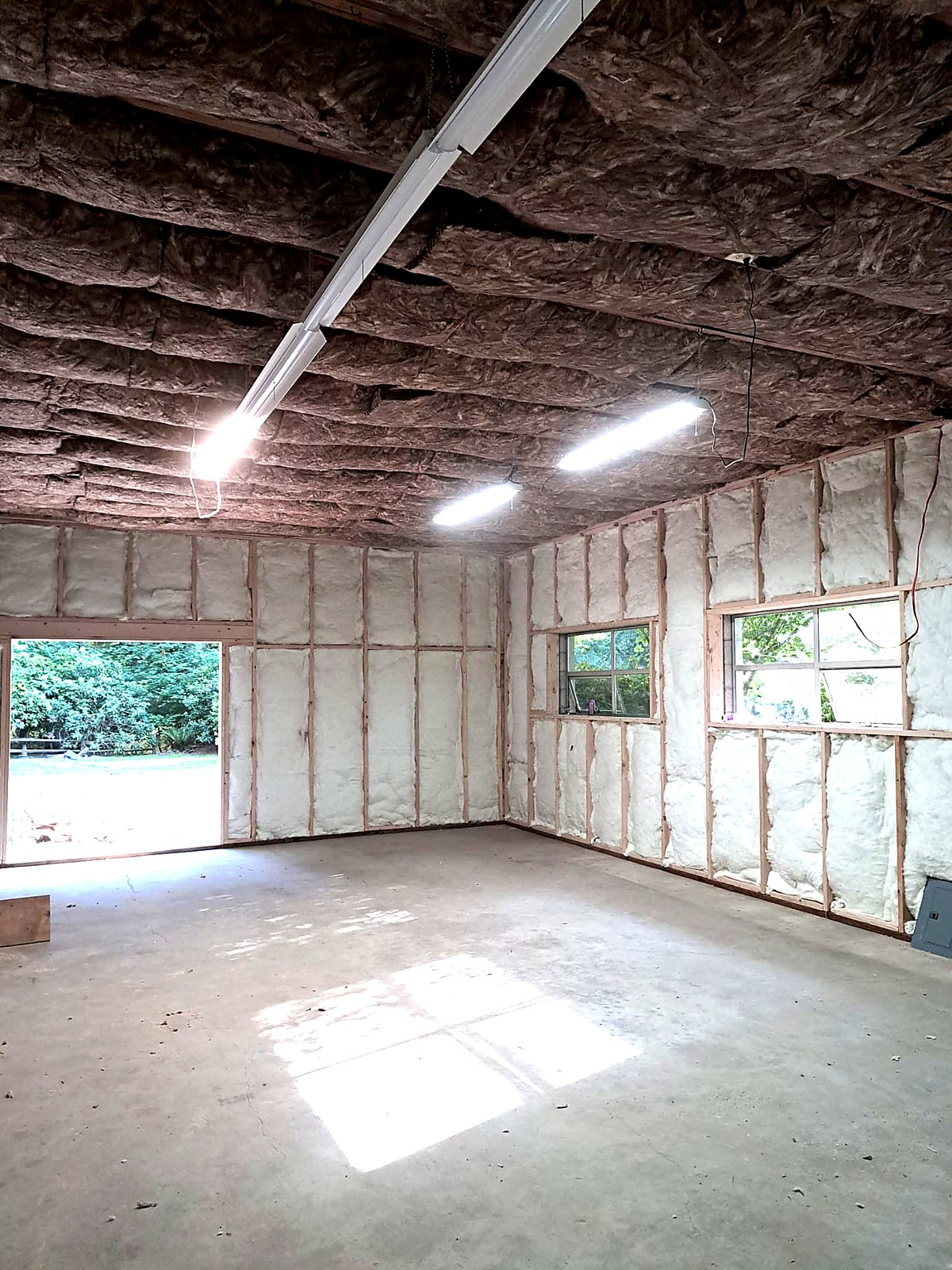
Wall cavities insulated before drywall
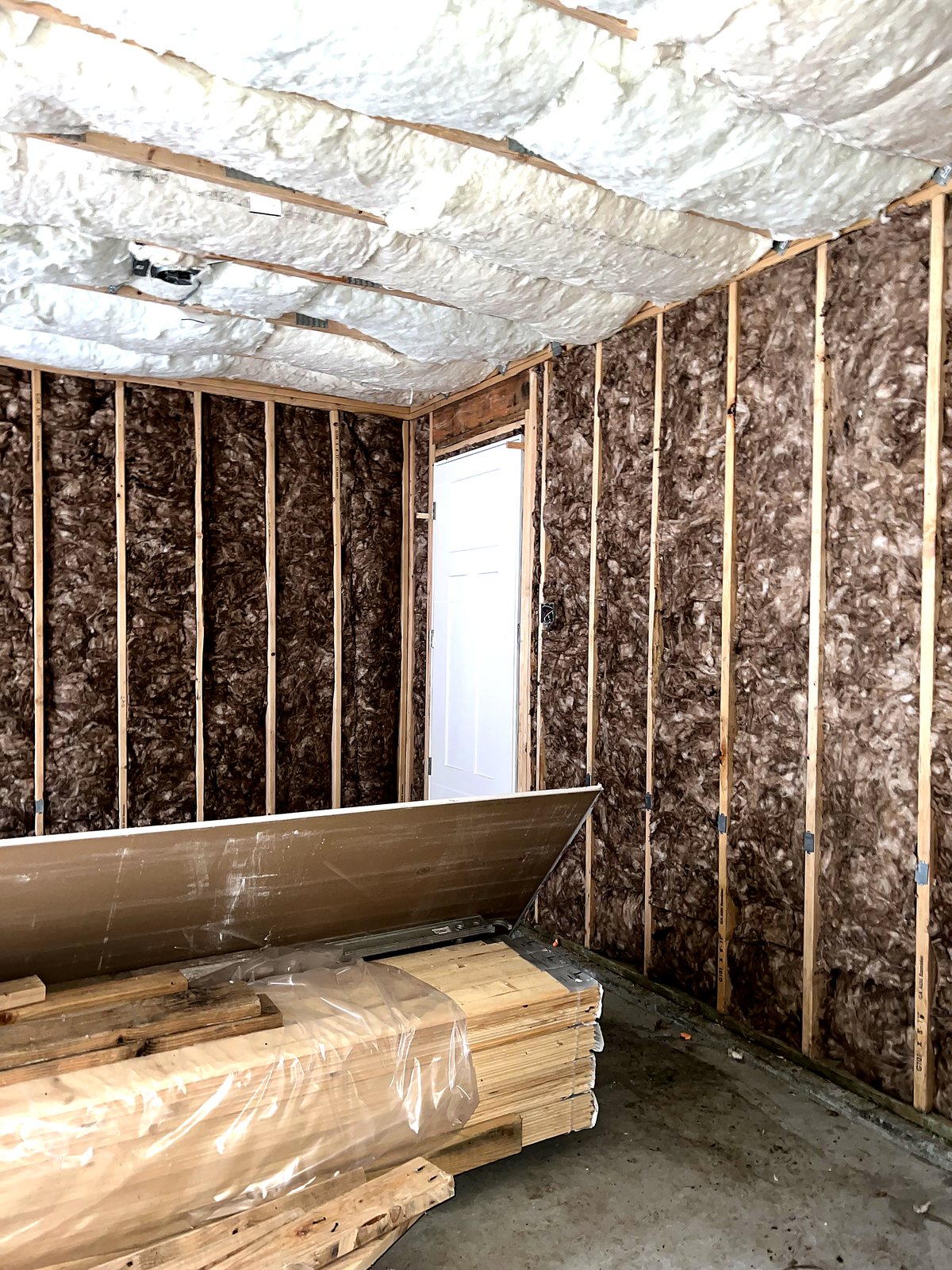
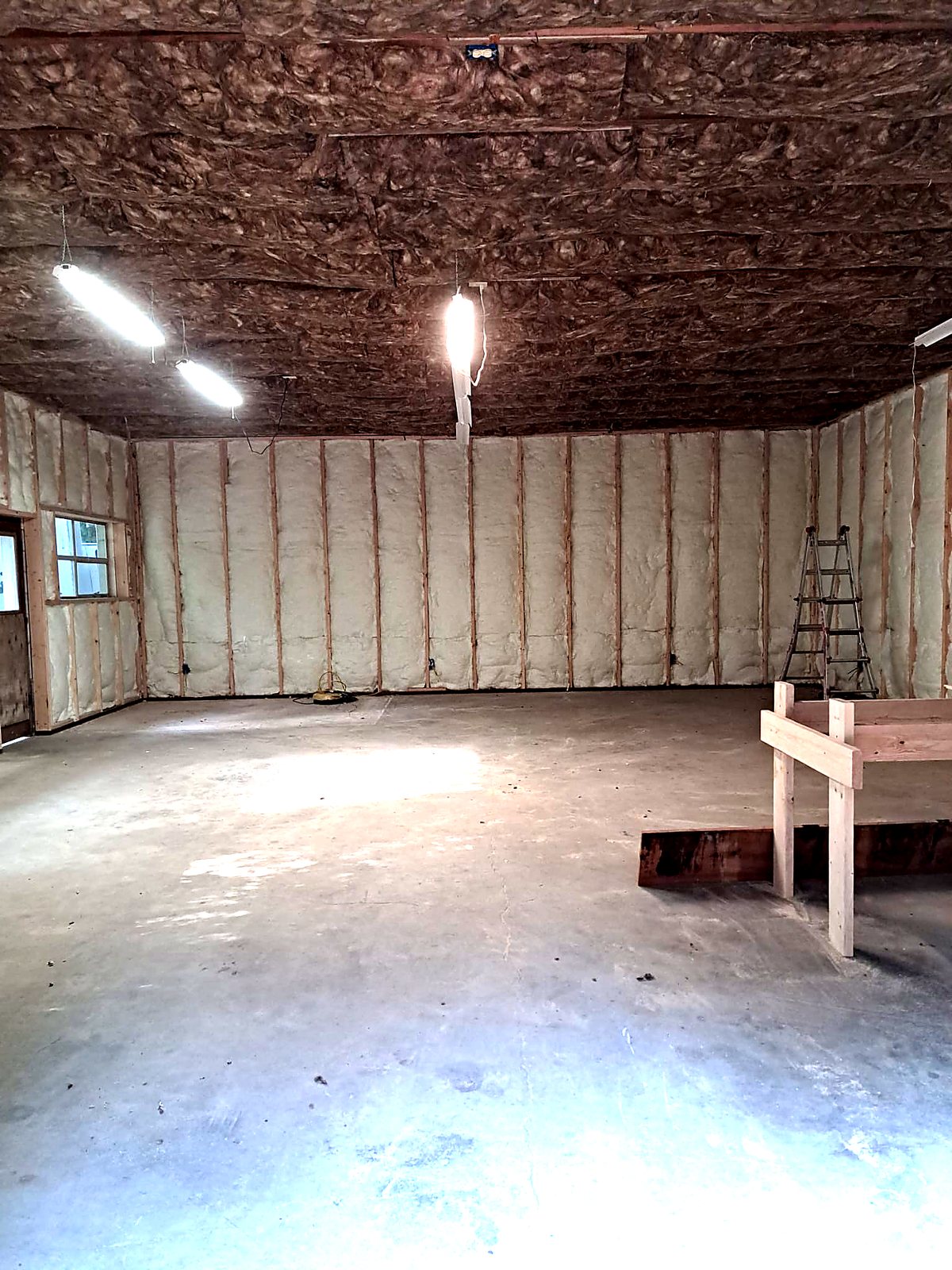
Framed lower level prepared for wall insulation

Wall Insulation, Basements & Bonus Rooms

Yes, we do wall insulation too. Crawl spaces and attics are our speciality, but the same crew insulates exterior walls, basement walls and the other parts of a typical Northwest Washington home that leak heat.

  • Exterior wall cavities in open framing
  • Basement and daylight-basement walls
  • Garage ceilings below living space
  • Bonus rooms and rooms over garages — the classic cold room
  • Knee walls and sloped ceilings in finished attics
  • Cantilevered floors and overhangs

Rooms over garages and bonus rooms are the most common comfort complaint we get called about after crawl spaces.

New Construction & Remodels

We work with homeowners, builders and remodelers across the region, and we are used to fitting into a schedule that has a framing inspection at one end and drywall at the other.

  • Whole-house insulation packages for new builds
  • Remodel and addition work sequenced around other trades
  • Familiar with Washington State Energy Code requirements
  • Coordination with inspectors and general contractors
  • Rental and investment property turnarounds
  • Insulation completed ahead of home-sale inspections

Selling a house and need the crawl space signed off? Tell us the date — we schedule around inspection deadlines regularly.

Finished insulated wall and ceiling assembly

Materials

What We Install and Why

R-value per inch is only part of the story — how a material behaves in a damp crawl space or a vented attic matters just as much. Here is what we use and where each one earns its place.

Fiberglass Batts

R-3.1 to R-3.8 per inch

The workhorse for joist bays and stud cavities. Affordable, non-combustible and effective when it is cut properly and supported so it stays in full contact with the subfloor. Poor installation — gaps, compression, sagging — is what makes batts underperform, not the material.

Blown-In Loose Fill

R-2.2 to R-2.7 per inch

Fiberglass blown to a measured depth over an open attic floor. It flows around wiring, framing and irregular shapes that batts have to be cut around, which is why it usually delivers a better real-world result in an attic.

Closed-Cell Spray Foam

R-6 to R-7 per inch

The highest R-value per inch of anything we install, and it air-seals as it goes. The right answer for shallow cavities, rim joists and irregular assemblies. More expensive per square foot, so we use it where it earns its cost.

Mineral Wool

R-4.0 to R-4.3 per inch

Denser than fiberglass, water-repellent, and considerably better at absorbing sound. Our usual choice for interior sound control walls and for locations where fire resistance matters.

Rigid Foam Board

R-5 to R-6 per inch

Used at rim joists, foundation walls and thermal bridges where a continuous layer of insulation does more good than filling a cavity.

Polyethylene Ground Cover

Vapor control, not R-value

Not insulation, but the component that decides whether your crawl space insulation lasts five years or twenty-five. Heavy-gauge sheeting, lapped, sealed and run up the stem walls.

Washington’s energy code targets roughly R-30 under the floor and R-49 in the attic for our climate zone. We measure what is there before quoting what should be.

Good Questions

Service Questions

Which insulation service does my house actually need?
That is what the free assessment is for. In most Northwest Washington homes the answer is a combination: remove what has failed, fix the moisture source, then insulate. We would rather tell you that the attic is the priority and the crawl space can wait a year than sell you both at once.
Do you work on commercial buildings and rentals?
Yes. We handle rental turnarounds, multi-unit buildings and light commercial work alongside our residential jobs, and we are used to working to a landlord or property manager’s timeline.
Can you work around a home inspection or sale deadline?
Regularly. Tell us the date when you call and we will tell you honestly whether we can hit it. A number of our jobs come from crawl spaces flagged during a sale inspection.
Do you offer utility rebates?
Some insulation upgrades qualify for utility incentives in this region. We will point you toward what is available for your address and utility, and we have worked with Cascade Natural Gas customers on rebate-eligible work.

Free Estimate

Not Sure Which Service You Need?

Tell us what you are seeing — cold floors, a musty smell, high bills, rodent noise — and we will work out what is actually causing it before quoting anything.

Call or text(425) 319-2029

Request Your Free Estimate

Same-day replies during business hours.

A photo of your crawl space or attic helps us quote faster. One photo (we resize it for you) or a PDF up to 3 MB.

Prefer to talk? Call or text (425) 319-2029. Free estimates — no obligation.Some locations require extra drive time, so a travel charge may apply — we’ll always let you know up front.